
3D Printed Models Gallery
Why 3D Tactile Galaxy Models Matter
Data-Driven Accessible Physical Representations of Galaxy Structure
Three-dimensional galaxy models provide a way to explore the structure of galaxies by translating astronomical observations into physical, volumetric forms. While images and maps reveal important information about galaxies, these models allow learners to examine structure from multiple perspectives, helping to connect observational data with the spatial organization of galaxies.
Developed using a modified Astro3D modeling pipeline, these models convert astronomical imaging and survey data into printable three-dimensional geometry. By incorporating information from optical observations and radio datasets, the models represent features such as spiral structure, asymmetry, and overall morphology. In classroom, outreach, and research-adjacent environments, these models support a deeper understanding of how galaxies are structured and how astronomers interpret observational data.
Educational Challenges in Physics
Astronomy is often communicated through images and maps that represent complex structures on two-dimensional surfaces. While these representations are essential for studying galaxies, they can make it difficult for learners to interpret the three-dimensional nature of these systems. Understanding how galaxies are shaped, how their components are arranged, and how they appear from different perspectives requires translating flat images into spatial mental models.
For many students, concepts such as spiral structure, inclination, and asymmetry are introduced through diagrams or simulations that require strong visual interpretation skills. As a result, learners may find it challenging to fully grasp how galaxies are structured in three dimensions and how astronomers interpret observational data to understand that structure.
The Role of Physical Tactile Models in Astronomy Learning
Three-dimensional tactile galaxy models provide a way to explore galaxy structure by translating observational data into physical, volumetric forms. By interacting with these models, learners can examine how features such as spiral arms, central bulges, and overall morphology are arranged in space, helping to build a more intuitive understanding of galaxy structure.
When used alongside telescope images and survey data, these models offer an additional perspective on how galaxies are studied. Learners can compare physical models with visual representations, explore how orientation affects what we observe, and better understand how different observational techniques contribute to our interpretation of galaxy structure.
In addition to supporting spatial understanding, these models can also contribute to accessible learning environments. By providing a physical representation of galaxy structure, the models allow learners to explore shape, orientation, and relative structure through touch. This tactile interaction can support learners who benefit from hands-on exploration while complementing visual representations used in astronomy education.
For educators, these models support lessons on galaxy morphology and the interpretation of astronomical observations. By allowing students to physically explore structure and orientation, these models encourage discussion, inquiry, and deeper engagement with how astronomers study galaxies.
Educational Benefits
Three-dimensional galaxy models support learning by providing a physical way to explore galaxy structure and orientation. Rather than relying solely on diagrams or images, learners can interact with models to examine how galaxies are shaped and how their features are arranged in space. This type of interaction helps reinforce spatial reasoning and supports a more intuitive understanding of galaxy morphology.
In classroom and outreach environments, these models can be used alongside telescope images and observational data to support discussions about how galaxies are studied. Learners can compare different galaxy shapes, explore how orientation influences what we observe, and connect physical models to the data used by astronomers. This approach encourages inquiry-based learning and helps students engage more actively with the interpretation of astronomical observations.
These models can also contribute to inclusive learning environments by providing an additional, tactile way to explore structure. By allowing learners to physically examine shape and orientation, they offer another pathway for understanding that complements visual representations commonly used in astronomy education.
Tactile Galaxy Structure Models
From Astronomical Data to Physical Models
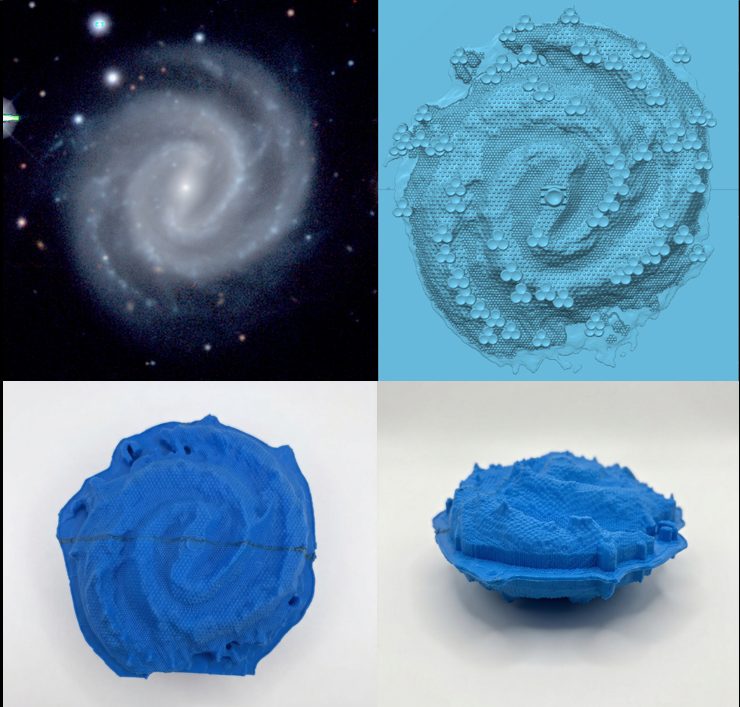
Three-dimensional galaxy models are generated by translating astronomical observations into physical, printable forms. Using a modified version of the Astro3D modeling pipeline, imaging and survey data are processed to create volumetric representations of galaxies that reflect their observed structure.
Depending on the dataset, this process can incorporate information from both optical observations and radio surveys. Optical images highlight the distribution of stars and visible features, while radio data can reveal the structure and extent of gas within galaxies. By combining these sources, the resulting models capture different aspects of galaxy morphology in a single physical representation.
The modeling process converts variations in brightness and intensity into changes in height and structure within the printed model. These transformations allow features such as spiral patterns, asymmetries, and overall shape to be represented in three dimensions. The final models provide a way to explore how observational data is used to study galaxy structure, supporting a more intuitive understanding of how galaxies are interpreted from telescope observations. This approach reflects the broader use of data-driven modeling techniques in astronomy, where observational data is used to infer and visualize the structure of galaxies.
Exploring Galaxy Structure Through Touch
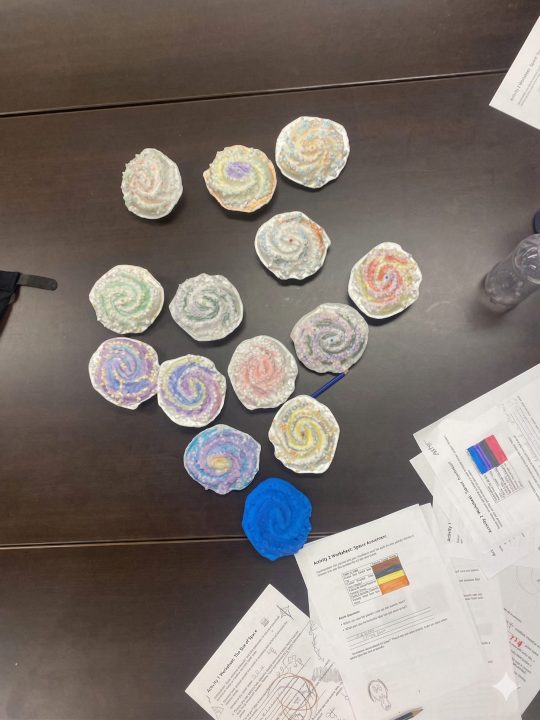
Three-dimensional galaxy models allow learners to explore the structure of galaxies through direct physical interaction. By handling the models, users can trace spiral features, identify central regions, and examine variations in shape and thickness that reflect differences in galaxy morphology.
When used alongside telescope images and observational data, these models provide an additional way for learners to engage with the same information. By comparing physical models with visual representations, learners can better understand how orientation, structure, and observational perspective influence how galaxies appear.
For educators, tactile galaxy models can support lessons on galaxy morphology and the interpretation of astronomical observations. Learners can explore structural features through touch, relate the models to the data used by astronomers, and engage in discussions about how galaxy structure is studied and understood. This interaction encourages inquiry-based learning and supports a more active approach to exploring astronomy concepts.
Accessibility Features
Tactile Texture Design
Accessibility is a central consideration in the design of three-dimensional galaxy models, particularly through the use of tactile surface features that represent different structural components of a galaxy. Rather than relying solely on overall shape, these models incorporate a range of textures that allow users to distinguish between features through touch.
Distinct surface patterns are used to represent key elements of galaxy structure. Large, rough stippling is used to indicate spiral arms, allowing users to trace their shape and extent across the model. Finer stippling represents the distribution of gas, providing a contrast in texture that reflects differences between structural components. Central regions, such as the galactic bulge, are represented using smooth surfaces or layered forms, often incorporating line patterns or raised features to distinguish them from surrounding structures. In some models, clustered cylindrical features are used to represent regions of active star formation, providing localized points of interest that can be identified through touch.
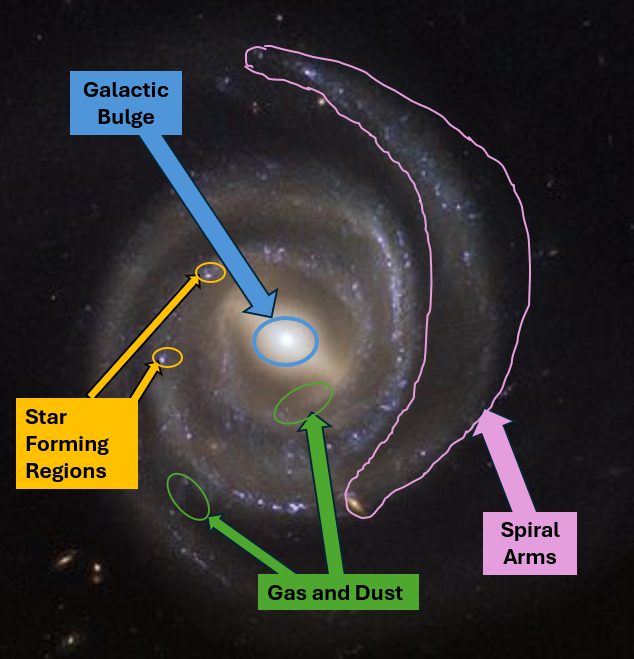
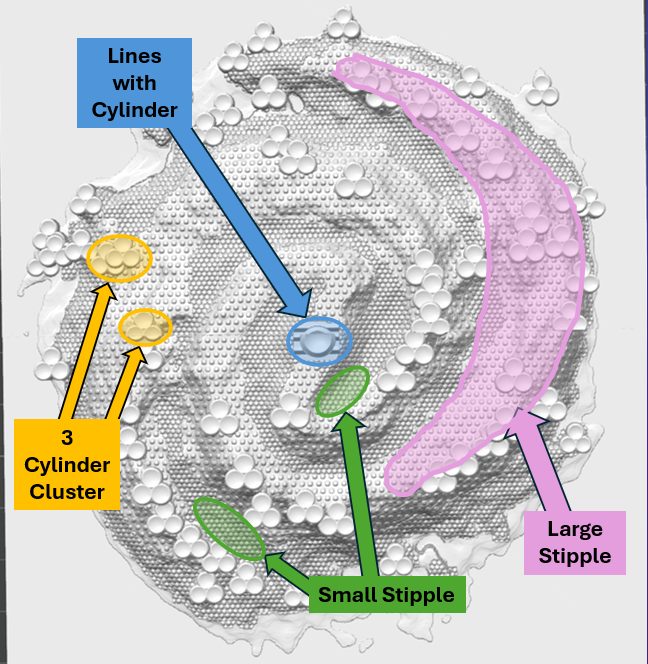
These textures are designed to function as a tactile mapping system, allowing users to interpret galaxy structure through consistent physical cues. By moving their hands across the model, learners can identify different components, compare regions, and build an understanding of how galaxies are organized. This approach supports learners who are blind or have low vision by providing a way to independently explore and interpret galaxy structure without relying solely on visual representations.
At the same time, these tactile features complement visual observation. When used alongside images or other data representations, the models provide multiple pathways for understanding, allowing learners to connect physical structure with observational data. By integrating texture, form, and interaction into the design process, three-dimensional galaxy models support a more inclusive and engaging approach to exploring galaxy morphology.
Future Development
The development of three-dimensional galaxy models represents an ongoing effort to expand how astronomical data can be translated into physical and accessible formats. Future work will focus on refining the modeling pipeline and incorporating a broader range of observational datasets, allowing for the creation of models that represent a wider variety of galaxy types, structures, and environments.
A key area of development will involve further refining the use of tactile textures to represent different components of galaxy structure. This includes improving the clarity and consistency of surface patterns used to distinguish features such as spiral arms, gas distribution, central regions, and star-forming areas. By developing a more standardized tactile “language,” these models can become easier to interpret and more effective as educational tools, particularly for learners who rely on touch as a primary mode of interaction.
Future iterations will also explore how these models can be integrated more effectively into classroom and outreach environments. This may include the development of supporting educational materials, guided activities, and model sets that allow learners to compare different galaxy morphologies and observational perspectives. By connecting physical models with the datasets they represent, these tools can help strengthen understanding of how astronomers study and interpret galaxy structure.
In addition, continued development of data-driven modeling techniques will support closer alignment between educational tools and current research practices. By refining how observational data is translated into three-dimensional form, these models have the potential to support both teaching and research-adjacent applications, providing new ways to visualize and explore galaxy structure.