
Education Hub
About Grant
Grant Hurley is a teacher candidate at Queen’s University and an Inclusive Educational Content Developer at the McDonald Institute. His work focuses on developing interactive, accessible models that connect astrophysics and particle physics research with education and public engagement.
Through the Physics in Three Dimensions initiative, he has led the development of tactile galaxy models, lithophane-based representations of astronomical data, and interactive models of astroparticle physics and detector systems. His work explores how complex scientific concepts can be translated into physical formats that support both visual and tactile learning.
Background and Experience
Grant Hurley’s work is informed by a combination of experience in astrophysics, education, and hands-on model development. As a teacher candidate at Queen’s University, he has worked in classroom environments where he has developed and delivered lessons in physics and mathematics, informing the design of models that support diverse learning styles and encourage active engagement.
In addition to his work in education, he has presented aspects of this project in academic and outreach settings, contributing to discussions on how physical models can be used to communicate complex scientific concepts. These experiences have helped shape the development of the project as both an educational tool and a platform for science communication.
His work also builds on extensive experience in three-dimensional modeling and fabrication. Through the development of these models, he has explored how digital data can be translated into physical form, with a focus on maintaining scientific accuracy while supporting accessibility and interaction.
Project Origins
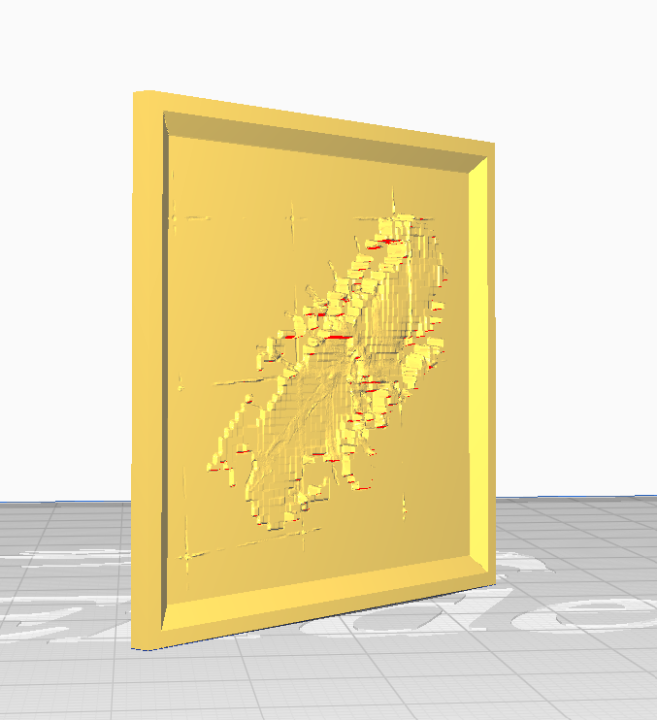
The development of this work began during undergraduate studies in astrophysics, where an early interest in visualizing galaxy structure led to the exploration of three-dimensional modeling techniques. Initial prototypes were developed as part of independent work and discussions with a thesis supervisor, with the goal of translating observational data into physical representations that could be explored beyond traditional visualizations.
What began as an exploratory project quickly expanded into a broader investigation of how astronomical data could be transformed into interactive models. Early iterations focused on creating three-dimensional representations of galaxies, testing how structure, orientation, and observational data could be conveyed through physical form.
Development of the Project
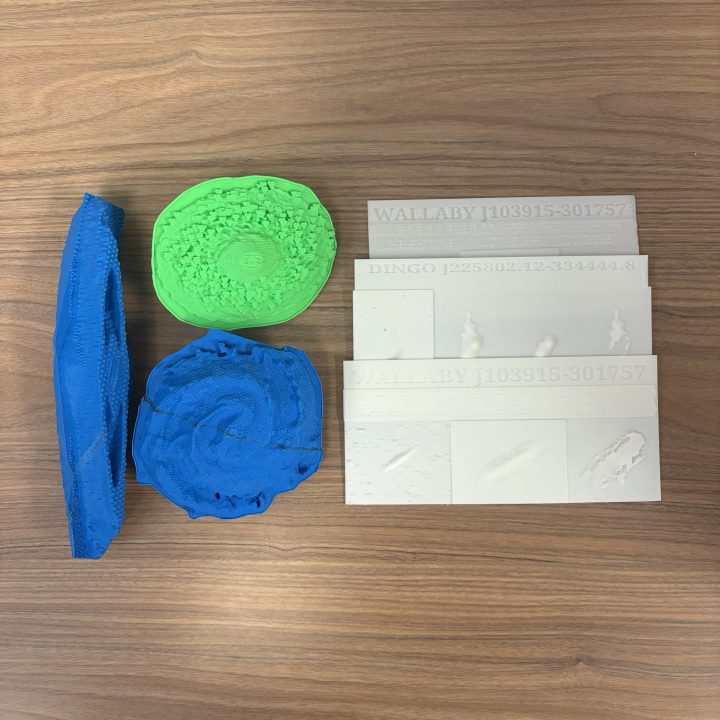
As the project evolved, the scope expanded to include multiple approaches to representing astrophysical data. This included the development of lithophane models that combine optical and radio observations, as well as fully three-dimensional galaxy models generated using modified data-processing pipelines.
A key focus of the work became accessibility and multi-sensory learning. By integrating tactile features, braille labeling, and structured surface design, the models were developed to support a wider range of learners while maintaining strong connections to the underlying scientific data.
Through iterative design and testing, the project transitioned from exploratory prototypes to a cohesive set of models that could be used in educational and outreach environments.
Current Work at the McDonald Institute
At the McDonald Institute, this work has been further developed into a series of interactive models used in outreach programming and educational initiatives. This includes the creation of tactile galaxy lithophanes, three-dimensional galaxy models derived from observational data, and physical representations of particle physics concepts and detector systems for use in education settings.
These models are designed to support hands-on learning and to bridge the gap between scientific research and public understanding. By combining data-driven modelling with accessible design, the project contributes to the McDonald Institute’s mission of connecting fundamental physics research with education and outreach.
Future Directions
Ongoing work continues to explore how three-dimensional modeling and fabrication can be used to support both education and research in astrophysics and astroparticle physics. This includes expanding the range of models, refining accessibility features, and investigating how physical representations can support new ways of interpreting and engaging with scientific data.