
Education Hub
The McDonald Institute supports innovative approaches that connect fundamental physics research with education and public engagement. This 3D printing initiative develops data-driven and concept-based models that translate complex scientific ideas into interactive, tactile learning tools.
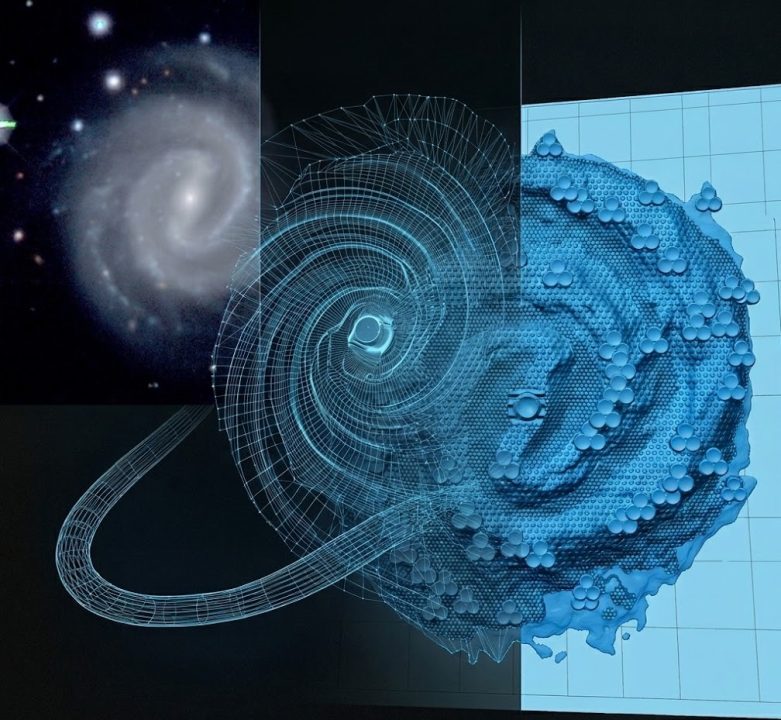
A central component of the project focuses on galaxy structure and dark matter, transforming astronomical survey data into physical models that represent spiral structure, gas distribution, and extended halos. By converting digital datasets into tangible forms, the initiative creates new pathways for exploring how galaxies are organized and how astronomers infer the presence of invisible components such as dark matter.
In addition to astrophysical models, the initiative expands into broader areas of particle and astroparticle physics. 3D printed resources have been developed to support learning about the Standard Model of particle physics, including interactive quark-based puzzles that illustrate fundamental building blocks of matter. Conceptual and structural models of the DEAP-3600 detector have also been created to support visitor engagement and educational programming, offering physical representations of large-scale experimental infrastructure and its role in dark matter research.
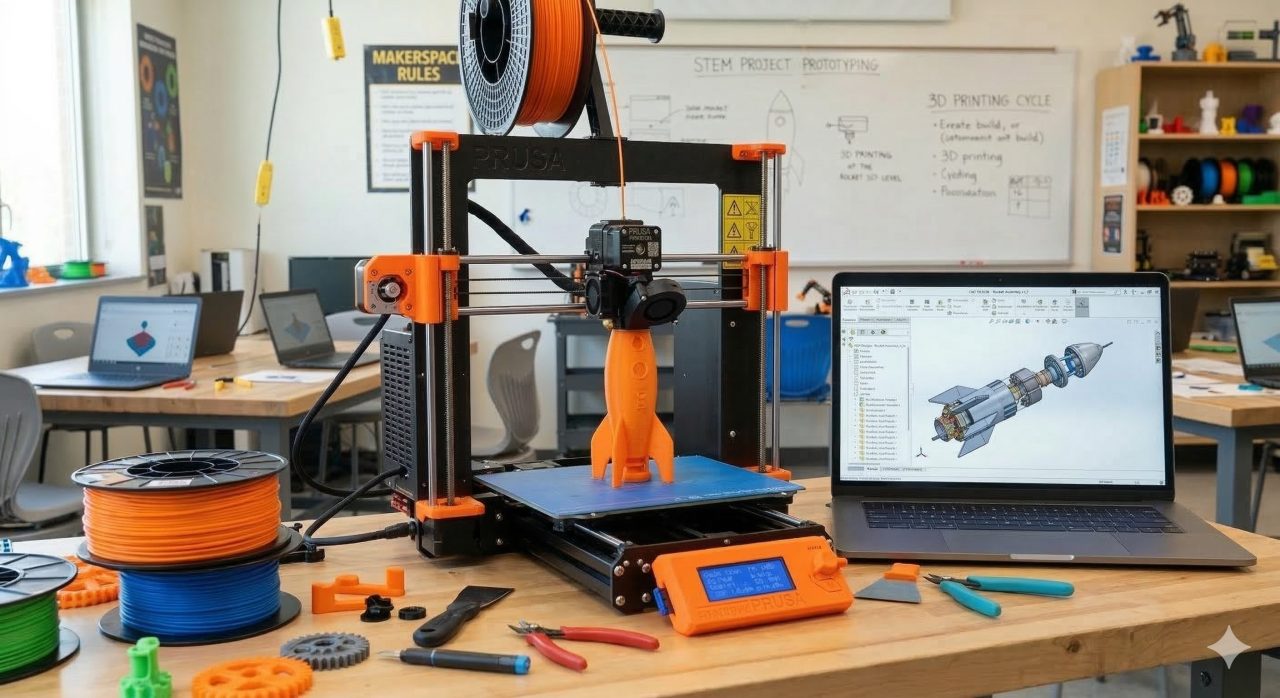
Designed for classrooms, outreach programs, and public exhibitions, these models provide interactive components for the Visitor Centre and external education initiatives. Astronomy and particle physics are often communicated through abstract diagrams and visual imagery; tactile and physical models expand access to these ideas and enable multi-sensory exploration of scale, structure, and interaction.
Developed at the McDonald Institute by Grant Hurley, this initiative bridges astrophysics research, particle physics, and educational innovation. It reflects the Institute’s commitment to advancing scientific understanding while broadening participation in fundamental physics.
The Models
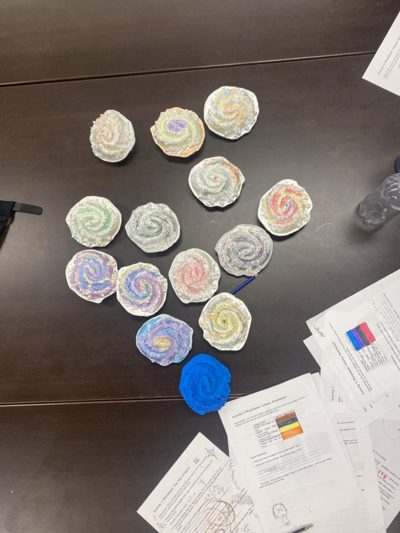
Discover a growing collection of 3D printed models that transform astronomy and astroparticle physics into hands-on experiences. From galaxy structures to interactive educational and tactile displays, each model is built to help make complex science more accessible, engaging, and memorable. Click through to explore the full range of models and see how they can support outreach, education, accessibility, and future research ideas.
Educational Impact
The 3D printed physics models developed through this initiative are designed to strengthen conceptual understanding by transforming abstract scientific ideas into interactive learning experiences. Across classrooms, outreach programs, and Visitor Center environments, these models support active engagement with topics that are often introduced through equations or static diagrams. By allowing learners to physically explore galaxy structure, particle composition, and experimental detector design, the models promote deeper spatial reasoning and conceptual clarity.
In educational settings, hands-on interaction encourages learners to move beyond memorization and toward structural understanding. Tracing spiral arms, assembling quark combinations, examining detector geometry, or comparing visible matter to dark matter halos allows students to connect theoretical explanations with physical representation. This approach supports diverse learning styles and reinforces key concepts in astrophysics and particle physics through multi-sensory engagement.
The models have been used in outreach demonstrations, summer programming, and classroom environments to facilitate guided discussion and inquiry-based learning. In each context, they provide a focal point for conversation, enabling educators to illustrate scale, structure, symmetry, and experimental design in a format that is both intuitive and memorable. By integrating research-informed content with interactive design, the initiative strengthens connections between fundamental physics research and public education, contributing to broader participation in scientific discovery.
The effectiveness of these models is further supported by intentional design choices that prioritize clarity, usability, and adaptability across learning environments. As astronomy and particle physics are often communicated through highly visual representations, the initiative incorporates features that encourage exploration through multiple modes of interaction. These considerations naturally extend into a broader commitment to accessibility and inclusive design.
Accessibility and Inclusive Design
Accessibility and inclusive designs are integrated into the development process from the earliest stages of model creation. Because much of astrophysics and particle physics relies on visual data products — images, graphs, and simulations — translating these concepts into tactile and multi-sensory formats expands how learners can engage with scientific content. Rather than treating accessibility as an add-on feature, the initiative incorporates structural, textural, and spatial considerations directly into the design of each model.
Many of the 3D printed models include raised contours, distinct surface features, and modular components that allow learners to physically trace structure and differentiate between elements. Galaxy lithophanes combine illuminated visual detail with tactile surface variation, while volumetric galaxy models and detector representations allow users to explore spatial relationships through touch. Where appropriate, braille labeling and tactile legends are incorporated to provide orientation cues and descriptive information, supporting learners who are blind or have low vision while also reinforcing clarity for all users.
Interactivity further strengthens accessibility. Rotational displays, removable sections, and cutaway views enable learners to explore internal components and structural relationships dynamically rather than passively observing a static object. These features support multi-sensory learning environments in which visual, tactile, and spatial exploration work together to deepen understanding.
By embedding inclusive design principles into the physical and conceptual development of each model, the initiative supports broader participation in physics education. This approach aligns with the McDonald Institute’s commitment to inclusive science engagement, ensuring that complex topics such as galaxy dynamics, particle interactions, and dark matter detection can be explored through multiple pathways of understanding.
Project Lead
Grant Hurley is a teacher candidate at Queen’s University and an Inclusive Educational Content Developer at the McDonald Institute. He is the project lead for Physics in Three Dimensions, where he develops interactive, accessible models that connect astrophysics and particle physics research with education and public engagement.
His work includes the creation of tactile galaxy lithophanes, three-dimensional galaxy models derived from observational data, and physical representations of particle physics concepts for use in classroom and visitor centre environments. Through this work, he explores how complex scientific ideas can be translated into physical formats that support both visual and tactile learning.